How to Build a Dividend Portfolio from Scratch
I make my living investing in commercial real estate here in the Midwest. I like brick-and-mortar assets because they produce something tangible: monthly rent checks. But over the years, readers of this blog have asked me if there is an easier, less capital-intensive way to build a reliable stream of passive income without dealing with tenants, leaky roofs, or commercial leases.
My answer is always the same: dividend-paying stocks.
When you buy a dividend stock, you are buying a tiny slice of a real business. And just like my tenants pay me rent for using my buildings, these companies pay you “rent” simply for owning their shares. If you are starting from absolute scratch with zero experience, building a dividend portfolio is one of the most practical ways to secure your financial future.
There are no tricks here. No complex trading strategies, no crypto speculation, and no get-rich-quick promises. This is a slow, boring, and highly effective blueprint for regular, middle-income Americans who want to put their hard-earned money to work. Let’s walk through how to build your dividend portfolio from the ground up.
What Exactly is a Dividend Portfolio?
Before we look at the steps, let’s make sure we understand the mechanics. When a stable, mature company makes a profit, it has a few choices. It can reinvest that money back into the business, buy back its own shares, or pay a portion of those profits directly to its shareholders in cash. That cash payment is a dividend.
A dividend portfolio is simply a collection of these profit-sharing stocks, held inside an investment account, designed to maximize that cash payout over time.
Most companies pay dividends every three months (quarterly), though a few pay monthly. Your goal in building this portfolio is not to watch the stock price jump up and down every day. Your goal is to accumulate enough shares so that the regular cash payments cover a meaningful portion of your living expenses.
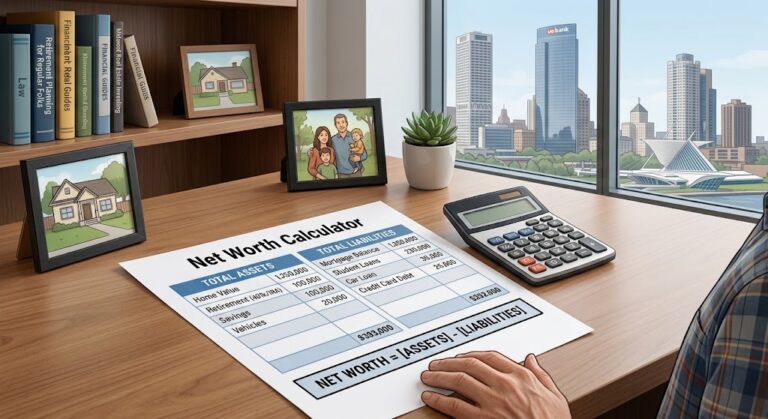
Step 1: Clean Up Your Financial Foundation
I cannot in good conscience tell you to start buying stocks if your financial house is on fire. Investing is the second step; stability is the first. Before you put a single dollar into the stock market, you must do two things:
- Pay off high-interest debt: If you are carrying credit card debt at 18% or 20% interest, paying that off is the absolute best investment you can make. No stock portfolio will reliably return 20% a year to offset that loss.
- Build a basic emergency fund: Set aside three to six months of living expenses in a simple high-yield savings account. If your car breaks down or your furnace goes out, you do not want to be forced to sell your dividend stocks at a loss just to pay for repairs.
Once you have a clean slate and some cash in reserve, you are ready to invest.
Step 2: Choose the Right Account
To buy stocks, you need a brokerage account. Today, major brokerages offer commission-free trading, meaning it costs you nothing to buy or sell shares. You have two main choices for where to house your dividend portfolio:
1. Tax-Advantaged Accounts (IRAs)
If you are investing for retirement, a Traditional or Roth IRA is usually the best place to start. In a Roth IRA, your money grows tax-free, and your dividend payouts are not taxed as they come in. This allows your portfolio to compound much faster because Uncle Sam isn’t taking a cut of your dividends every year.
2. Taxable Brokerage Accounts
If you want the flexibility to spend your dividend income before you reach retirement age (59½), you will need a standard taxable brokerage account. You can withdraw your money at any time, but you will owe taxes on your dividends in the year you receive them.
My advice: If you are starting from scratch, maximize your Roth IRA first. The tax savings over twenty or thirty years are massive.
Step 3: Decide Between ETFs and Individual Stocks
There are two paths you can take when building your portfolio. You can buy individual stocks, or you can buy Exchange-Traded Funds (ETFs).
The ETF Path (Highly Recommended for Beginners)
An ETF is a basket of hundreds of different stocks bundled into a single share. When you buy one share of a dividend ETF, you instantly own a tiny fraction of all the companies inside that fund.
This gives you instant diversification. If one company in the fund goes bankrupt, it won’t ruin you because you still own hundreds of others. Excellent, low-cost options include funds like the Vanguard Dividend Appreciation ETF (VIG) or the Schwab U.S. Dividend Equity ETF (SCHD). This is a hands-off, “set-it-and-forget-it” approach.
The Individual Stock Path
If you prefer to hand-select your companies, you can buy shares of individual businesses. This requires more work, research, and emotional discipline. You have to monitor the companies you own to ensure they remain healthy. If you choose this path, you should aim to eventually own at least 15 to 20 different stocks across various industries to protect yourself from a sudden downturn in any single sector.
Step 4: How to Pick Safe, Reliable Dividend Stocks
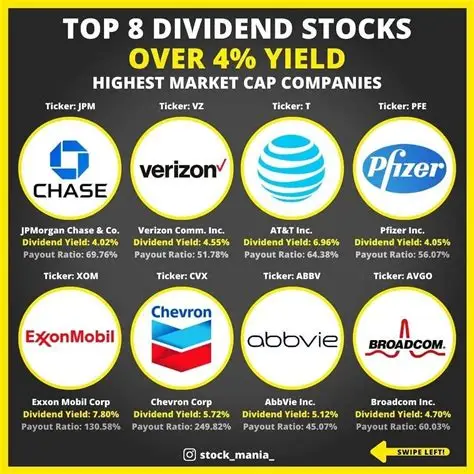
If you decide to pick individual stocks, do not just buy the companies with the highest yields. That is a rookie mistake called “yield chasing.” Often, an exceptionally high dividend yield (like 10% or 15%) is a sign of a company in deep financial trouble whose stock price has plummeted. That dividend is highly likely to be cut or eliminated entirely.
Instead, use this simple three-point checklist to find safe, reliable dividend payers:
1. Look for “Dividend Aristocrats” or “Dividend Kings”
These are elite groups of companies. Dividend Aristocrats are companies in the S&P 500 that have not only paid but increased their dividend payouts every single year for at least 25 consecutive years. Dividend Kings have done it for 50 consecutive years. These companies (think Procter & Gamble, Coca-Cola, or Johnson & Johnson) have survived recessions, high inflation, and market crashes while still giving their shareholders a raise every year.
2. Check the Payout Ratio
The payout ratio tells you what percentage of a company’s net earnings is used to pay the dividend. For example, if a company earns $10 per share and pays $4 per share in dividends, its payout ratio is 40%.
As a general rule, look for companies with a payout ratio below 60%. This means the company keeps plenty of cash to grow its business, pay down debt, and maintain the dividend even if profits temporarily drop during a tough year.
3. Seek Consistent Revenue and Earnings Growth
A dividend cannot grow over the long term unless the business itself is growing. Look at the company’s financial history over the last five to ten years. Are their sales and profits steadily moving upward? If a company’s earnings are flat or shrinking, their dividend will eventually stall out too.
Step 5: Harness the Power of DRIP
When you are starting from scratch, your quarterly dividend checks will be small. You might invest $1,000 and receive a check for $7.50 after three months. It is easy to look at that and think, “Why bother?”
This is where the magic of a Dividend Reinvestment Plan (DRIP) comes in.
Almost every major brokerage allows you to check a box to automatically reinvest your dividends. Instead of sending that $7.50 to your bank account, the brokerage automatically uses it to buy fractional shares of the stock that paid you.
Now, instead of owning 20 shares, you own 20.15 shares. Next quarter, you will receive a dividend on 20.15 shares, which means your next check will be slightly larger. You use that larger check to buy more shares, which pays a larger dividend, which buys more shares.
This creates a compounding snowball effect. Over ten, twenty, or thirty years, this cycle does the heavy lifting for you, turning modest monthly contributions into a significant wealth generator.
Step 6: Keep Feeding the Machine
Building a dividend portfolio is not a one-time event. You cannot buy $500 worth of stock, walk away, and expect to retire on it. You must treat your portfolio like a savings account that you feed regularly.
Set up an automatic monthly contribution. Whether it is $50, $200, or $1,000 a month, consistency is far more important than the starting amount. By investing a set amount of money every single month—a strategy known as dollar-cost averaging—you buy more shares when prices are low and fewer shares when prices are high. Over time, this lowers your average cost per share and builds your income stream systematically.
A Realistic Look at the Numbers
Let’s look at a practical example of what this looks like over time, without any hype.
Imagine you start with $0 and commit to investing $300 a month into a diversified dividend portfolio with an average dividend yield of 3%, and we assume the stock value and the dividend payouts grow at a conservative combined rate of 7% per year.
- After 10 Years: You will have invested $36,000 of your own money. Your portfolio will be worth roughly $51,000, and it will be generating about $1,500 a year in passive dividend income.
- After 20 Years: You will have invested $72,000. Your portfolio will have grown to about $152,000, generating roughly $4,500 a year in passive cash flow.
- After 30 Years: You will have invested $108,000. Your portfolio will have snowballed to over $350,000, paying you more than $10,500 every single year in dividends.
Remember, this is cash flow paid to you simply for owning the shares. You still own the underlying $350,000 worth of stock, which you can leave to your children or slowly sell down if needed.
The Bottom Line
Building a dividend portfolio from scratch doesn’t require a finance degree or a massive inheritance. It requires patience, discipline, and time. By choosing stable investments, keeping your costs low, reinvesting your payouts, and consistently adding capital month after month, you can build a reliable financial engine that works for you even when you aren’t working.
The Plain Money Takeaway: Stop waiting for the perfect market conditions. Open a low-cost brokerage account, set up a monthly transfer you can afford, buy a diversified dividend ETF or a few rock-solid Dividend Aristocrats, and turn on automatic reinvestment (DRIP). The best time to start building your income stream was ten years ago; the second best time is today.
Keep reading: Index Funds vs. Actively Managed Funds: Which Wins Long-Term?, Best Brokerage Accounts for Beginners in 2026, and How to Start Investing with $1,000: A Plain-English Guide.