How to Start Investing with $1,000: A Plain-English Guide
A thousand dollars feels like both a lot and not enough at the same time.
It’s enough to matter — enough that losing it would sting. But it doesn’t feel like the kind of money that changes your life. So a lot of people sit on it. They wait until they have more. They tell themselves they’ll figure out investing once the number gets bigger.
That’s a mistake, and the math proves it.
The single most important variable in long-term investing isn’t how much you invest. It’s how early you start. A thousand dollars invested at 25 is worth dramatically more at 65 than a thousand dollars invested at 35 — not because of anything you did, but because of time. Compound interest is the one financial force that genuinely works in your favor automatically, and the only way to activate it is to start.
So let’s talk about what to actually do with $1,000.
First: Get the Basics Right
Before you invest a dollar, two things need to be true.
You need an emergency fund. Not a full one necessarily, but something. If you invest $1,000 and then your car breaks down next month, you’ll sell those investments — probably at a bad time — to cover the repair. That’s not investing, that’s a roundtrip to nowhere. A general rule of thumb is three to six months of expenses in cash before investing aggressively. If you’re not there yet, split the difference: put $500 toward your emergency fund and $500 toward investing.
You need high-interest debt gone first. If you’re carrying credit card debt at 20% interest, paying that off is a guaranteed 20% return. No investment available to regular people reliably beats that. Pay off high-interest debt before you invest — full stop. The one exception most financial thinkers agree on is contributing enough to your employer’s 401k to capture the full match, since that’s an instant 50% to 100% return that beats even credit card payoff math.
If those two boxes are checked, you’re ready to invest.
Where $1,000 Actually Goes
The financial industry has a vested interest in making investing seem complicated. It isn’t. For someone starting with $1,000, the decision tree is genuinely short.
Step one: use a tax-advantaged account if you have access to one.
If your employer offers a 401k with a match and you’re not maxing the match, that’s your first dollar. Put enough in to get every penny of the match before you do anything else.
If you don’t have a 401k or you’ve already captured the full match, open a Roth IRA. A Roth IRA lets you invest after-tax dollars and pay zero taxes on growth and withdrawals in retirement. For someone early in their career or in a lower tax bracket, a Roth is almost always the right call. You can contribute up to $7,000 per year in 2024, and $1,000 fits comfortably within that limit.
Step two: pick what goes inside the account.
This is where most beginners overthink things. You’ve opened an IRA or 401k — now what do you buy?
For most people starting with $1,000, the answer is a single broad market index fund. That’s it.
Index Funds: The Honest Case
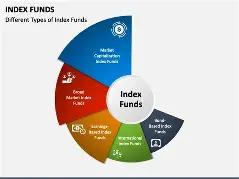
An index fund is a collection of stocks that tracks a market index — the S&P 500, the total US stock market, or the entire global market. When you buy one share of a total market index fund, you effectively own a tiny piece of every major company in America.
The case for index funds isn’t complicated. They’re cheap — expense ratios on major index funds from Vanguard, Fidelity, and Schwab are as low as 0.03% annually. They’re diversified — you’re not betting on any single company. And decades of data show that the overwhelming majority of actively managed funds — funds run by professional stock pickers — underperform simple index funds over long time horizons after fees.
This isn’t a controversial position anymore. It’s the consensus view among serious financial academics and an increasing number of practitioners. Warren Buffett has repeatedly said the average investor is best served by a low-cost S&P 500 index fund. He’s right.
With $1,000, buy a total market or S&P 500 index fund and leave it alone. Fidelity’s FZROX has a 0% expense ratio and no minimum investment. Vanguard’s VTSAX is the institutional standard but requires a $3,000 minimum — their ETF equivalent VTI has no minimum and works identically. Schwab’s SCHB is another solid option with rock-bottom fees.
Pick one. It genuinely does not matter which one within this category. They will all perform nearly identically over time. The decision you’re making is to be in the market, not which flavor of index fund to use.
What About Individual Stocks?
Picking individual stocks with $1,000 is not investing. It’s speculation.
That’s not a moral judgment — it’s a practical one. Individual stocks carry company-specific risk that diversification eliminates. A single bad earnings report, a management scandal, or an industry disruption can cut a stock’s value in half. When that happens in a diversified index fund it barely moves the needle. When it happens to a stock that represents 50% of your portfolio, it’s devastating.
Beyond risk, the evidence is clear: individual stock pickers — including professionals who do this full time — consistently underperform index funds over long periods. Not because they’re bad at their jobs but because markets are efficient and information is priced in faster than any individual can act on it.
By all means buy individual stocks someday if you enjoy it and treat it as entertainment spending. But with your first $1,000, buy the index fund.
What About Crypto?
Same answer, sharper version.
Cryptocurrency may have a role in a mature investment portfolio as a small speculative position. It has no role as a primary investment for someone just starting out with $1,000.
Crypto is extraordinarily volatile, largely unregulated, and has no underlying cash flow to anchor its value the way stocks represent ownership in real businesses and real estate generates rental income. The stories people tell about crypto returns are survivor bias — you hear from the people who timed it right, not from the far larger number who bought near peaks and sold in panic.
Start with the index fund. Get comfortable with how markets move. Revisit crypto later if you want to — with money you can genuinely afford to lose.
What About Real Estate with $1,000?
As someone who has built a commercial real estate portfolio, I’ll give you the honest answer: direct real estate investment generally requires more capital than $1,000.
That said, there are legitimate ways to get real estate exposure at this level.
REITs — real estate investment trusts — are publicly traded companies that own income-producing real estate. You can buy shares of a REIT the same way you buy a stock. They’re required by law to distribute at least 90% of taxable income to shareholders as dividends, which makes them an income-oriented investment. A REIT ETF like VNQ gives you diversified exposure to commercial real estate with no minimum investment.
Real estate crowdfunding platforms like Fundrise allow investments starting around $10 to $500 into diversified real estate portfolios. Returns have historically been reasonable, though liquidity is limited — you can’t sell a Fundrise investment as easily as you can sell a stock.
For most people starting with $1,000, I’d still lean toward the broad market index fund first and add real estate exposure later as the portfolio grows. But if real estate is where your conviction lives, a REIT ETF inside a Roth IRA is a perfectly rational choice.
The Account Setup: Step by Step
Here’s exactly what to do:
Open a Roth IRA at Fidelity, Vanguard, or Schwab. All three are free to open, have no account minimums for basic accounts, and are among the most reputable financial institutions in the country. The application takes about 15 minutes online.
Fund it. Transfer $1,000 from your checking account. This takes one to three business days to settle.
Buy the index fund. Search for FZROX, VTI, or SCHB depending on which platform you’re on. Enter the dollar amount — $1,000 — and place the order. Fidelity and Schwab allow fractional shares so you can invest the full amount. Vanguard does as well for ETFs.
Set up automatic contributions if you can. Even $50 per month added to that initial $1,000 compounds into something meaningful over time. Automation removes the decision from your monthly to-do list.
Leave it alone. This is genuinely the hardest part. Markets go up and down. There will be a month — probably several — where you check your balance and it’s lower than what you put in. That is normal. That is not a signal to sell. Time in the market beats timing the market, and the investors who build real wealth are almost always the ones who stayed invested through the volatility rather than the ones who tried to trade around it.
What $1,000 Becomes
At a historical average stock market return of roughly 7% annually after inflation, $1,000 invested today becomes:
- $1,967 in 10 years
- $3,870 in 20 years
- $7,612 in 30 years
- $14,974 in 40 years
That’s without adding another dollar. Add $100 per month on top of that initial $1,000 and the 30-year number jumps to over $120,000.
The math isn’t magic. It’s just time doing what time does when you let it work.
The only way to get those numbers is to start. Not when you have more money. Not when the market looks safer. Now, with what you have.
The Bottom Line
A thousand dollars is enough to start. Open the account, buy the index fund, set up automatic contributions, and leave it alone. That’s the whole strategy — and it’s the same one that has built more long-term wealth for regular people than anything more complicated.
The sophistication comes later. The starting comes now.
Mark Caldwell is a commercial real estate investor based in the Midwest with a portfolio spanning retail, industrial, and commercial properties across multiple states. PlainMoneyAdvice.com is where he writes about money the way he wishes someone had explained it to him.
Keep reading: Best Brokerage Accounts for Beginners in 2026, Index Funds vs. Actively Managed Funds: Which Wins Long-Term?, and How to Build a Dividend Portfolio from Scratch.