Best Brokerage Accounts for Beginners in 2026
Every brokerage comparison article you’ll find is written the same way: a list of ten features that all sound important, followed by a chart where every company scores 4.5 stars out of 5. That’s not helpful. Here’s what actually matters, and which accounts are worth your first dollar.
The short answer
If you want one recommendation and nothing else: open a Fidelity account. It has no account minimum, no monthly fees, fractional shares, and the widest range of account types of any major broker, so you won’t have to switch firms as your situation gets more complicated. If you specifically want a strong mobile app and don’t care about anything else, SoFi Invest is fine too. That covers 90% of people reading this. The rest of this article is for the other 10% who want to know why.
What actually matters (and what doesn’t)
Every major broker in 2026 charges $0 commission on stock and ETF trades. That fight is over — Schwab killed trading fees back in 2019, and everyone else followed within weeks. If a platform is still charging you per trade for basic stock and ETF orders, close the account. There’s no excuse for it anymore.
Fractional shares are also table stakes now. You can put $20 into a $500 stock and own a sliver of it. This matters more than people give it credit for — it means you can build a diversified position with a few hundred dollars instead of needing thousands to buy full shares of index funds like VOO or individual names like Apple.
So if commissions and fractional shares are a wash across the board, what should actually decide it for you?
- Where your money already lives. If your 401(k) is at Fidelity, opening your IRA and brokerage account there too means one login, one app, and account transfers that take a phone call instead of a paperwork nightmare.
- What you’re going to do with the account. A taxable brokerage account for general investing has different needs than a Roth IRA you’re opening for retirement, or a custodial account for a kid. Not every broker handles every account type equally well.
- Whether you’ll actually use the education tools. Some brokers put real effort into teaching new investors — structured courses, paper trading, webinars. Others slap a FAQ page online and call it done. If you’re brand new, this is worth weighting more heavily than people assume.
- Customer support when something breaks. This one doesn’t show up on comparison charts, but it matters the first time your transfer gets stuck or your account gets flagged for review.
Everything else — slick app design, research reports you’ll never read your first year, advanced charting tools — is noise for a beginner. You can always move to a more advanced platform once you know what you’re actually doing.
The best options, ranked honestly
1. Fidelity — best overall, no real weakness
Fidelity is the account I tell people to open when they don’t want to think about it further. No minimum, no monthly fee, and it covers every account type you’ll plausibly need — taxable brokerage, Roth IRA, traditional IRA, HSA, and custodial accounts for kids. That range matters because most people’s financial life gets more complicated over time, not less. You don’t want to be opening a fourth brokerage account in five years just because your first pick didn’t offer an HSA.
Fidelity also runs a genuinely useful research and education library, which is rare — most “beginner-friendly” brokers treat education as a checkbox rather than a real feature.
Best for: anyone who wants a single account that will still make sense in ten years.
2. Charles Schwab — best if you’ll eventually want more control
Schwab pioneered the zero-commission model and still runs one of the most complete platforms in the industry. The standout is thinkorswim, Schwab’s advanced trading platform — overkill for your first month, but it means you won’t outgrow the platform if you get more serious about active investing later. Schwab also runs a beginner promotion where opening an account and depositing at least $50 gets you $50 in free stock, which is a nice, if minor, incentive.
Best for: beginners who want room to grow into a more advanced platform without switching brokers.
3. SoFi Invest — best if you want the account and your checking/savings in one app
SoFi’s real advantage is the ecosystem — checking, savings, and investing under one login, with a clean, simple interface that doesn’t overwhelm a first-time user. No account minimums, no monthly fees on the base tier. If you want more hand-holding, SoFi Plus (around $10/month) adds access to a financial planner, which — done the math — comes out to roughly 0.5% annually on a $25,000 balance. That’s more than Vanguard charges for a managed account, so it’s not free advice, but it’s a low-stakes way to get a real conversation with a human if you’re nervous about your first moves.
Best for: people who want investing, checking, and savings in a single simple app.
4. Robinhood, Webull, and Moomoo — fine, with caveats
These platforms are genuinely capable now — commission-free, fractional shares, decent charting. Robinhood in particular has cleaned up its act since the meme-stock era and now offers IRAs with matching contributions on certain tiers. The honest caveat: these apps are built with a gamified, notification-heavy design that can nudge new investors toward overtrading. If you know that’s a weakness of yours, pick a plainer platform. If you’re disciplined, they work fine.
Best for: people specifically drawn to active trading or charting tools, who already know they won’t get baited into overtrading by push notifications.
Brokerage account vs. IRA — pick the right account type first
This is the step people skip, and it costs them money. Before you pick a broker, decide what kind of account you’re opening, because the tax treatment is the actual decision — the broker is secondary.
- Taxable brokerage account: No contribution limit, no restrictions on withdrawals, but you’ll owe capital gains tax when you sell winners and dividend tax along the way. Use this for money you might need before retirement, or once you’ve maxed out tax-advantaged space.
- Traditional IRA: Contributions may be tax-deductible depending on your income and whether you have a workplace plan. Money grows tax-deferred; you pay ordinary income tax when you withdraw in retirement.
- Roth IRA: You contribute after-tax dollars, but qualified withdrawals in retirement are completely tax-free — including all the growth. For 2026, the contribution limit is $7,500 ($8,600 if you’re 50 or older), and Roth eligibility phases out between $153,000–$168,000 of MAGI for single filers and $242,000–$252,000 for married couples filing jointly.
If you’re eligible for a Roth and you’re early in your career, it’s usually the better default — you’re likely in a lower tax bracket now than you will be decades from now, so paying the tax up front is the cheaper option over a long enough timeline. That said, this depends heavily on your specific income trajectory and tax situation, so it’s worth running your own numbers or talking to a tax professional rather than taking a blanket rule as gospel.
Mistakes beginners actually make
Not “you should diversify” — you already know that. The mistakes that actually cost people money in year one:
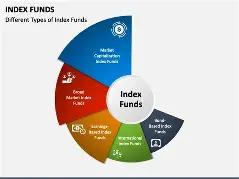
- Sitting in cash after funding the account. Depositing money and not investing it defeats the entire purpose. If you’re overwhelmed by choice, a total market index fund is a defensible default while you learn more.
- Chasing whatever’s up 40% this month. By the time a stock is trending on social media, the easy money is usually gone.
- Confusing a savings goal with an investing goal. Money you need within two or three years — a house down payment, an emergency fund — shouldn’t be in the market at all. That’s what a high-yield savings account is for.
- Ignoring account fees on the retirement side. The brokerage might be free, but check the expense ratios on the funds you actually buy inside it. A 0.03% index fund and a 0.75% actively managed fund can differ by tens of thousands of dollars over 30 years.
Bottom line
Open the account that matches the account types you’ll actually need, not the one with the flashiest app. For most beginners, that’s Fidelity. If you specifically want everything — banking and investing — under one roof, SoFi is a reasonable second choice. Skip anything still charging trading commissions, and don’t let the platform’s notifications talk you into trading more than your plan calls for.
The broker matters less than people think. What you do inside the account — how consistently you contribute, and how long you leave it alone — matters far more.
Mark Caldwell writes on personal finance, real estate, and long-term wealth building at PlainMoneyAdvice.com.
Keep reading: How to Start Investing with $1,000: A Plain-English Guide, Index Funds vs. Actively Managed Funds: Which Wins Long-Term?, and How to Build a Dividend Portfolio from Scratch.