
Commercial Real Estate Investing for Beginners: How It Actually Works
Most people think commercial real estate is for wealthy institutions, REITs, and guys in expensive suits closing deals on skyscrapers. That’s not wrong — those people are absolutely in this market. But they’re not the only ones, and the assumption that commercial real estate is out of reach for regular investors is one of the more expensive misconceptions in personal finance.
I got into commercial real estate without a finance degree, without a family real estate empire to inherit, and without unlimited capital. What I had was a willingness to learn how the math worked and enough patience to find deals that made sense. Over time that turned into a multi-state portfolio of retail properties, industrial assets, and commercial buildings with long-term tenants that produce income month after month.
This article is what I wish someone had handed me at the beginning. Not theory. Not inspiration. Just a plain-English explanation of how commercial real estate actually works — and whether it makes sense for you.
What Is Commercial Real Estate?
Commercial real estate is any property used for business purposes rather than personal residence. That covers a lot of ground.
Office buildings. Retail strip centers. Industrial warehouses. Self-storage facilities. Medical offices. Triple-net leased fast food buildings. Apartment complexes with five or more units. Car washes. Gas stations.
If it generates income from a business or tenant operating a business, it’s generally considered commercial real estate.
The distinction matters because commercial real estate operates under different rules than residential. Leases are longer. Tenants are businesses, not families. Valuations are based primarily on income rather than comparable sales. Financing is structured differently. And the tax treatment — particularly around depreciation — is significantly more favorable for investors.
How Commercial Real Estate Makes Money
There are three ways commercial real estate generates returns:
Rental income. Tenants pay rent. After expenses, that becomes your cash flow. This is the primary reason most investors buy commercial real estate — stable, predictable income from businesses that have signed leases committing to pay for years at a time.
Appreciation. Commercial properties increase in value over time, both from general market conditions and from improvements you make. Unlike residential real estate where comparable sales drive pricing, commercial values are directly tied to income — increase the NOI and you increase the value. This gives investors a degree of control over appreciation that residential real estate doesn’t offer.
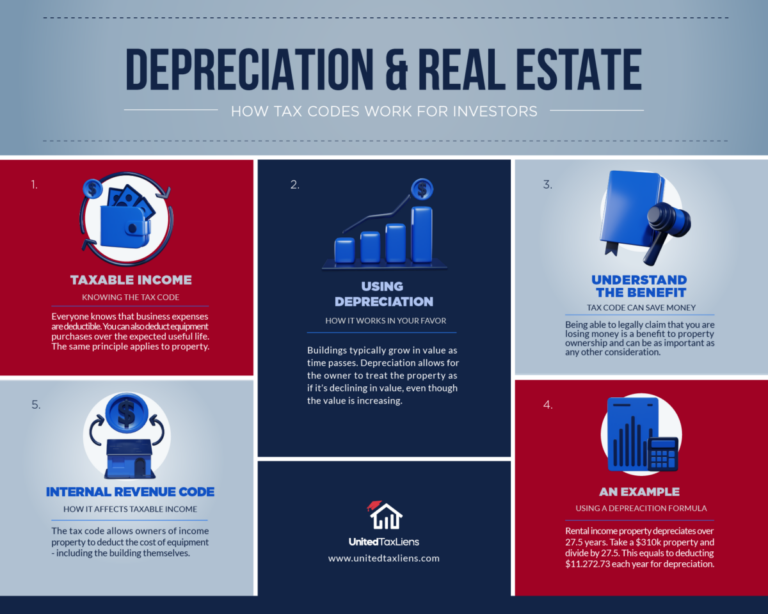
Tax benefits. This one surprises people. Commercial real estate comes with significant depreciation deductions that can offset rental income and, for qualifying investors, even ordinary income. The tax advantages of commercial real estate ownership are one of the primary reasons wealthy people use it to build and preserve wealth. Done correctly, it’s one of the most tax-efficient investments available.
The Core Metric: Cap Rate
If you want to evaluate commercial real estate, you need to understand cap rate. It’s the foundational metric — the first number any experienced investor calculates when looking at a deal.
Cap rate equals net operating income divided by purchase price, expressed as a percentage. A property producing $70,000 in annual net income purchased for $1,000,000 has a 7% cap rate.
What that means in plain English: if you paid all cash, you’d earn a 7% annual return from operations. Cap rate strips out financing and taxes to give you a clean comparison of one property versus another.
In today’s market, cap rates generally range from about 4% on premium urban assets to 9% or higher on riskier properties in secondary markets. The lower the cap rate, the more expensive the property relative to its income — and usually the safer or more desirable the asset. Higher cap rates mean more income relative to price, but typically for a reason worth investigating.
Understanding cap rate is table stakes for commercial real estate investing. If you want a deeper explanation with worked examples, we cover it in detail in our cap rate beginner’s guide.
Types of Commercial Real Estate Worth Knowing
Not all commercial real estate is the same, and different property types suit different investor profiles.
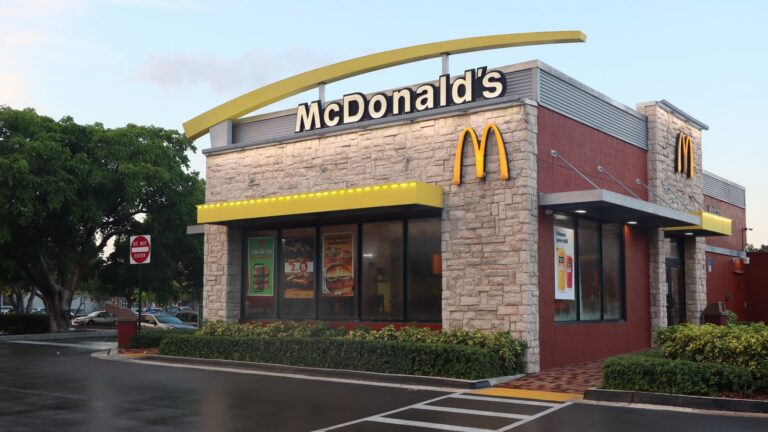
NNN (Triple Net) properties are among the most popular entry points for individual investors. In a triple net lease the tenant pays not just rent but also property taxes, insurance, and maintenance. Your job as landlord is essentially to cash the check. These properties — often fast food restaurants, pharmacies, dollar stores, or automotive services — are valued for their simplicity and predictability. The tradeoff is that NNN properties typically carry lower cap rates because of that stability.
Multi-tenant retail — strip centers, neighborhood shopping centers — produces higher yields but requires more active management. You’re dealing with multiple leases, multiple tenant relationships, and more moving parts. When it works it works well. When vacancies hit simultaneously it gets painful fast.
Industrial properties — warehouses, distribution centers, flex space — have become extremely attractive over the past decade driven by e-commerce growth. Tenants tend to be sticky, leases tend to be long, and maintenance requirements are often lower than retail.
Office is the asset class most investors are cautious about right now. Remote work permanently altered demand for office space in ways the market is still absorbing. Not uninvestable, but requires extra diligence.
Multifamily with five or more units crosses into commercial territory and is often the first step for investors coming from single-family residential. The transition feels more natural because you’re still dealing with residential tenants, but the valuation and financing structure is commercial.
How Financing Works
Commercial real estate financing is meaningfully different from a residential mortgage and it’s worth understanding before you start looking at deals.
Commercial loans are typically shorter term — five, seven, or ten year terms are common, often with 20 to 25 year amortization schedules. That means your loan matures and requires refinancing or payoff well before it’s fully amortized, which is a risk to plan for.
Down payments are larger. Expect 25% to 35% down on most commercial deals, though SBA loans can reduce this for owner-occupied properties.
Lenders underwrite commercial loans based heavily on the property’s income, not just your personal financials. The debt service coverage ratio — NOI divided by annual debt payments — is the key metric. Most lenders want to see a DSCR of at least 1.25, meaning the property produces 25% more income than needed to cover debt payments.
Interest rates on commercial loans are typically higher than residential rates and are often variable or tied to short-term benchmarks rather than fixed for 30 years. This introduces refinancing risk that residential investors don’t deal with in the same way.
How Much Money Do You Actually Need?
This is the question most beginners actually want answered, and the honest answer is: more than single-family residential, less than most people assume.
A small NNN property — a single-tenant fast food building or a dollar store — might be priced anywhere from $800,000 to $2,000,000. At 30% down that’s $240,000 to $600,000 in equity required. That’s real money, and it’s out of reach for most individual investors going it alone.
Which is why most individual investors don’t go it alone.
Partnerships are extremely common in commercial real estate. Two or three investors pooling capital to acquire a property is a completely normal structure. One partner may contribute more capital, another may contribute deal-finding or management expertise. The economics get split according to whatever the partners agree on.
REITs — real estate investment trusts — offer another entry point. A REIT lets you invest in commercial real estate portfolios through the stock market with as little as the price of one share. You don’t get the tax benefits of direct ownership and you don’t control the assets, but you get exposure to commercial real estate income without the capital requirements of direct ownership.
Real estate crowdfunding platforms have also emerged as a middle path — direct investment in specific commercial deals with minimums as low as $5,000 to $25,000 depending on the platform. These vary significantly in quality and transparency, so due diligence on the platform itself is as important as due diligence on the deal.
What Makes a Good Deal
Experienced commercial real estate investors evaluate deals across a consistent set of criteria. Here’s a simplified version of what actually matters.
Tenant quality. A property is only as good as the tenant paying the rent. A long-term lease with a nationally recognized credit tenant is worth more — and carries less risk — than the same building leased to a local business with no track record. Ask who is on the lease and research their financial stability.
Lease term remaining. A property with 15 years left on a lease is fundamentally different from the same property with 18 months left. Shorter remaining lease terms mean near-term vacancy risk and re-leasing costs. Price accordingly or walk away.
Location and market fundamentals. Commercial real estate is local in ways that matter. A retail property in a growing suburban corridor performs differently than an identical building in a declining downtown. Understand population trends, employment, and retail traffic in any market you’re considering.
Physical condition. Deferred maintenance on commercial properties is expensive. Get a proper inspection. Roof, HVAC, parking lot, and structural issues are the big-ticket items that can turn a good deal into a money pit.
The numbers. Run the cap rate. Stress test the NOI. Model what happens if a tenant leaves. If the deal only works under perfect conditions, it’s not a deal — it’s a bet.
Is Commercial Real Estate Right for You?
Commercial real estate is not a passive investment, at least not at the beginning. There’s a learning curve, a capital requirement, and a management responsibility that residential investing doesn’t fully prepare you for.
But for investors willing to do the work, the combination of income, appreciation, tax benefits, and inflation protection is genuinely difficult to replicate elsewhere. It’s not magic and it’s not guaranteed. It’s a business — one that rewards people who treat it like one.
If you’re starting from zero, spend the next six months learning before you spend a dollar. Read every deal you can find. Understand the metrics. Talk to investors who are already doing it. The education is free. The mistakes are not.
Mark Caldwell is a commercial real estate investor based in the Midwest with a portfolio spanning retail, industrial, and commercial properties across multiple states. PlainMoneyAdvice.com is where he writes about money the way he wishes someone had explained it to him.