1031 Exchange Guide: How to Defer Capital Gains Taxes on Real Estate
If you own investment real estate and you’re thinking about selling, there’s a decent chance you’re about to hand a huge chunk of your profit to the IRS without realizing you didn’t have to. A 1031 exchange lets you sell an investment property, roll the proceeds into another one, and push your capital gains tax bill down the road — sometimes for decades. It’s not a loophole. It’s been in the tax code since 1921. Most people just don’t understand how it works, so they never use it.
This guide walks through what a 1031 exchange actually is, who it’s for, and the rules that will disqualify you if you get them wrong.
What a 1031 Exchange Actually Does
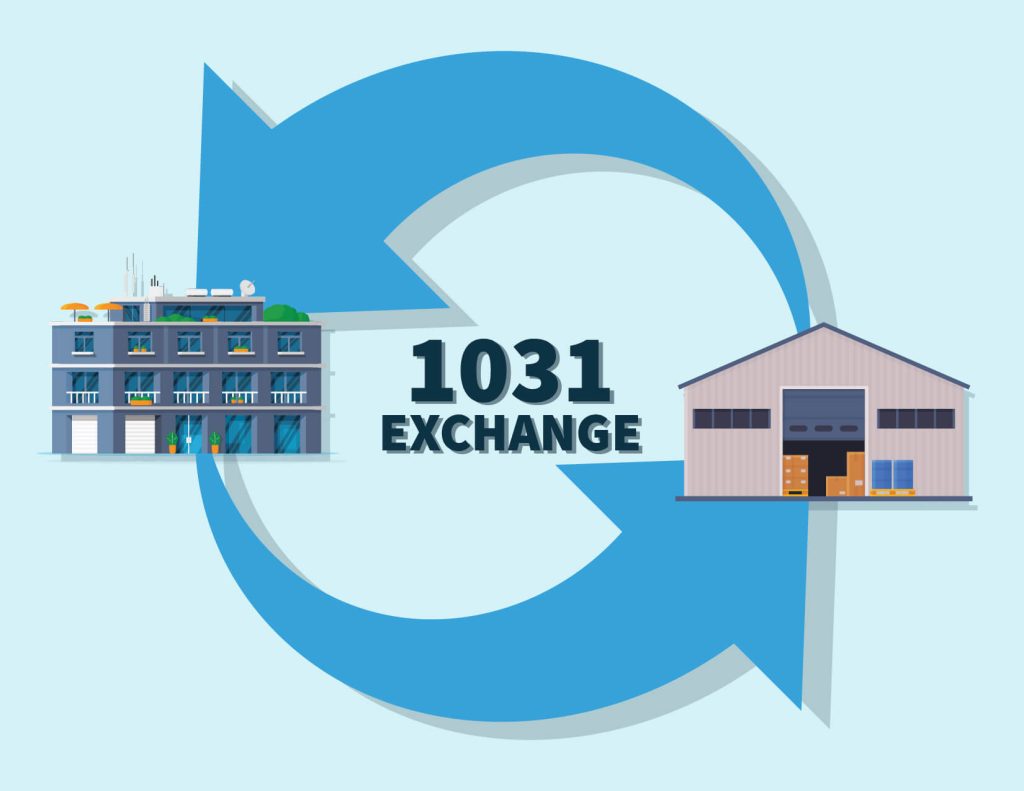
Named after Section 1031 of the Internal Revenue Code, this provision lets you defer capital gains tax when you sell investment or business real estate, as long as you reinvest the proceeds into another “like-kind” property. You’re not avoiding the tax — you’re postponing it. Your cost basis carries over into the new property, so the taxable gain follows you until you eventually sell without doing another exchange.
Here’s the part people miss: you can do this again and again. Sell a rental, buy another one through a 1031 exchange, sell that one a few years later, exchange again. Some investors never pay the capital gains tax during their lifetime. If the property is still in the estate when they die, their heirs get a “step-up in basis” — meaning the deferred gain can disappear entirely for tax purposes. That’s the strategy real estate investors call “swap till you drop,” and it’s completely legal.
Who Actually Qualifies
This only works for property held for investment or use in a trade or business. Your primary residence doesn’t qualify — there’s a separate exclusion for that (up to $250,000 in gain tax-free for single filers, $500,000 for married couples, under Section 121). A second home you use personally most of the year generally doesn’t qualify either, unless you’ve converted it to a genuine rental.
What does qualify: rental houses, duplexes, apartment buildings, commercial buildings, raw land held for investment, and even certain farmland or timberland. Since 2018, this only applies to real property — it used to cover things like business equipment and vehicles, but the Tax Cuts and Jobs Act eliminated that. Real estate only now.
“Like-kind” is broader than most people assume. It doesn’t mean you have to trade a duplex for another duplex. You can sell an apartment building and buy raw land. You can sell a strip mall and buy a single-family rental. Almost any real property held for investment counts as like-kind to any other real property held for investment.
The Timeline That Will Wreck Your Exchange If You Miss It
This is where most first-timers get burned. The IRS gives you two hard deadlines, and there’s no flexibility on either one:
45 days from the date you close on the sale of your original property to formally identify replacement properties in writing.
180 days from that same closing date to close on the purchase of the replacement property (or properties).
These clocks run concurrently, not sequentially, and they run on calendar days, not business days. Weekends and holidays count. If you close on your sale December 1, your 45-day identification deadline is January 15 and your 180-day closing deadline is May 30 — no extensions for the fact that it’s the holidays and nobody’s returning your calls.
You’re allowed to identify up to three potential replacement properties without restriction. There are alternate rules if you want to identify more than three, but for most people three is plenty of margin.
You Need a Qualified Intermediary — No Exceptions
You cannot touch the sale proceeds at any point during a 1031 exchange. Not for a day, not to “just hold it in savings for a week.” If the money hits your bank account, the exchange is dead and the entire gain becomes taxable that year.
To avoid this, you hire a Qualified Intermediary (QI) before you close on the sale. The QI holds the proceeds in escrow, handles the paperwork, and delivers the funds directly to close on the replacement property. You never have what the IRS calls “actual or constructive receipt” of the cash.
Pick your QI carefully. This is an unregulated industry in most states — literally anyone can set up shop as a QI. Use a company that’s bonded, insured, and has been doing this for years. Ask where the funds are held and whether they’re in a segregated account. QI failures and fraud do happen, and if your intermediary goes under with your money, you’re out both the property and the tax deferral.
“Boot” Will Tax You Even in a Successful Exchange
If you don’t reinvest every dollar of the sale proceeds, or if the debt on your new property is less than the debt you paid off on the old one, the difference is called “boot,” and it’s taxable in the year of the exchange — even though the rest of the exchange is valid.
The rule of thumb: to defer 100% of your gain, you need to buy a replacement property that’s equal to or greater in value than what you sold, and you need to reinvest all the net proceeds. If you pull cash out at closing, that cash is boot. If you trade down in value, the difference is boot. This trips people up because they assume the exchange is all-or-nothing. It isn’t — you can do a partial exchange and just pay tax on the portion that isn’t reinvested.
Depreciation Recapture Doesn’t Disappear
Capital gains tax isn’t the only thing at stake. If you’ve been depreciating the property, the IRS wants some of that back too, through depreciation recapture, taxed at a maximum rate of 25%. A 1031 exchange defers depreciation recapture along with the capital gains, as long as the exchange qualifies. This is one of the most valuable and least understood parts of the strategy — recapture can be a bigger hit than people expect, especially on a property you’ve owned a long time.
Common Mistakes That Blow Up Exchanges
Waiting too long to line up a replacement property. Forty-five days sounds like a lot until you’re trying to find, negotiate, and lock up a property under a deadline. Start looking before you close on the sale, not after.
Assuming any real estate professional can act as the intermediary. Your real estate agent, attorney, or accountant cannot serve as your QI if they’ve represented you in another capacity within the past two years. The IRS disqualifies “disqualified persons” for a reason — use an independent QI.
Forgetting about state taxes. Federal deferral doesn’t automatically mean state deferral. Some states have their own clawback rules if you later sell an exchanged property while living in a different state. Check your state’s rules before assuming full deferral.
Not accounting for closing costs correctly. Certain transaction costs can reduce your reinvestment requirement and others can’t. Get your QI and your CPA involved before closing, not after.
Is a 1031 Exchange Worth the Hassle?
If you’re sitting on real estate with substantial appreciation and you want to keep building wealth in real estate rather than cash out, yes — the tax savings are usually well worth the paperwork and the deadlines. If you’re looking to get out of real estate entirely and just want the cash, a 1031 exchange doesn’t help you; you’re just deferring the tax on a property you’ll eventually sell for cash anyway, and at that point you’ll owe everything you deferred.
The people who benefit most are investors who plan to keep trading up — moving from a smaller property into a larger one, consolidating multiple properties into one, or relocating their portfolio to a different market — without cashing out along the way.
Bottom Line
A 1031 exchange is one of the most powerful tools in the tax code for real estate investors, and it’s available to anyone who owns qualifying property, not just large institutional players. But the rules are unforgiving. Miss a deadline by one day, touch the proceeds even briefly, or misjudge the boot calculation, and you can lose the entire benefit. If you’re considering one, start the conversation with a Qualified Intermediary and your CPA well before you list the property — not after you’ve already got an accepted offer.
Mark Caldwell writes about real estate investing and personal finance at PlainMoneyAdvice.com. This article is for general informational purposes and isn’t a substitute for advice from a licensed tax professional.
Keep reading: Real Estate Depreciation and Taxes: What Every Landlord Needs to Know, NNN Lease Explained: What Regular Investors Need to Know, and Commercial Real Estate Investing for Beginners: How It Actually Works.