How to Pay Off $30,000 in Debt in 3 Years (Real Math)
Bymcald
Most debt payoff advice sounds like it was written by someone who has never actually been in debt. This isn’t that. Here’s what the numbers actually look like — and what it takes to make them work.
Notice something: in month 1, about $500 of your $1,116 payment goes to interest and only $616 reduces your actual balance. By month 30, less than $150 goes to interest. This is why the early months feel slow — and why quitting early is so costly. Stick with it past month 12 and the momentum is undeniable.
Mark Caldwell is a commercial real estate investor and the founder of PlainMoneyAdvice.com. He writes about personal finance for people who want real numbers, not inspirational filler.
The Problem With Most Debt Advice
You’ve read the articles. “Stop buying lattes.” “Cut your subscriptions.” “Make a budget.” Great. You did all that and you’re still $30,000 in the hole, wondering how you’re supposed to turn $14 saved on coffee into debt freedom. Here’s the honest answer: small cuts alone won’t get you there. Paying off $30,000 in three years requires a real plan with real math — not motivational slogans. I’m a commercial real estate investor based in the Midwest. I spend my days analyzing numbers for a living. Debt is just another math problem. And math problems have solutions. Let’s work through yours.First, Let’s Do the Actual Math
To pay off $30,000 in 36 months, you need to know three things: your interest rate, your required monthly payment, and the total cost of carrying that debt if you don’t act. Scenario: $30,000 at 20% APR (average credit card rate as of 2024)- Required monthly payment to zero it out in 36 months: ~$1,116
- Total interest paid over 3 years: ~$10,176
- Total paid out: ~$40,176
- Monthly payment needed: ~$968
- Total interest: ~$4,848
- Total paid: ~$34,848
Step 1: Attack the Rate Before You Attack the Balance
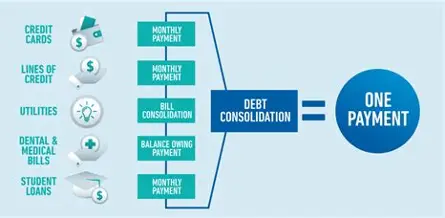
The fastest way to speed up debt payoff isn’t to pay more — it’s to pay less in interest. Balance transfer cards. Many major issuers offer 0% APR for 12–21 months with a 3–5% transfer fee. On $30,000, a 3% fee costs $900 upfront — but if you’re currently paying 20% APR, you’re burning through $6,000 a year in interest. Even 12 months at 0% is worth thousands. Personal loan consolidation. Credit unions and online lenders often offer personal loans at 8–14% for borrowers with decent credit. Consolidating $30,000 from 20% down to 11% saves roughly $2,700 in interest over 3 years and lowers your required monthly payment. Negotiate your existing rate. Call your credit card company and ask for a rate reduction. This works more often than people think — especially if you’ve been a customer for years and have a decent payment history. One call, five minutes, possible result: 2–5 points off your rate. What you should NOT do: Open new credit accounts to “improve your utilization” while you’re trying to pay down debt. That’s rearranging deck chairs.Step 2: Know Exactly Where the $1,116 Is Coming From
The number is $1,116 per month (at 20% APR) or roughly $968 (at 10%). Either way, you need to find somewhere between $970 and $1,120 a month to throw at this debt.Column A: Cut Spending
Go through your last 90 days of bank and credit card statements — not in your head, actually look at them. Common budget leaks that surprise people:- Unused or underused subscriptions: $50–$200/month on average
- Dining out: Most people underestimate this by 40–60%
- Convenience spending (delivery fees, gas station purchases, impulse Amazon orders): $100–$300/month
- Gym memberships, streaming services, cloud storage you forgot you upgraded
Column B: Increase Income
This is where the real acceleration comes from — and where most advice articles wimp out. A second income stream doesn’t have to be a “side hustle empire.” It just has to be consistent. Realistic options that actual people in median-income households use:- Part-time work on weekends: $400–$800/month after tax
- Gig work (delivery, rideshare, TaskRabbit): $300–$700/month depending on hours
- Selling stuff you already own: One-time boost of $500–$2,000
- Overtime at your current job (if available): Often the easiest, highest-paying option per hour
- Freelancing your existing skills: Takes longer to build but pays better
The Honest Target
If you cut $400/month and earn an extra $700/month, you have $1,100 per month — close enough. The rounding error disappears fast when balances drop and interest charges shrink.Step 3: Pick a Payoff Method and Actually Use It
If you have multiple accounts making up that $30,000, the order you pay them off matters — psychologically and mathematically. The Avalanche Method (mathematically optimal): Pay minimums on everything. Throw all extra money at the highest-interest debt first. When it’s gone, roll that payment into the next highest. Repeat. This saves the most money. Period. The Snowball Method (psychologically optimal for some people): Pay minimums on everything. Throw all extra money at the smallest balance first. When it’s gone, roll that payment to the next smallest. This saves less money mathematically, but it generates momentum. If you’re the type of person who quits when they don’t see progress, the snowball might keep you in the game long enough to win. My honest take: if you’ve already made it this far in this article, you’re analytical enough to use the avalanche. Run the numbers. The avalanche wins.Step 4: Set Up Systems, Not Willpower
Willpower is a finite resource. Systems are not. The single most important thing you can do: automate your debt payment the day after your paycheck hits. Set up an automatic transfer to your debt accounts. Make the money unavailable before you have a chance to spend it. This isn’t a trick. It’s the same principle I use in real estate — forced savings through automatic mechanisms outperforms even the most disciplined manual effort, every time. Additional system-building moves:- Put your credit cards somewhere inconvenient. You don’t need to cut them up, just slow down the impulse.
- Track your balance weekly, not monthly. Watching the number drop is motivating, and it catches problems early.
- Tell one person about your plan. One person who will ask “how’s the debt going?” is enough.
Month-by-Month: What the Progress Actually Looks Like
At $1,116/month on $30,000 at 20% APR, here’s a realistic snapshot of where you stand:| Month | Balance Remaining | Interest Paid That Month |
|---|---|---|
| 1 | $29,384 | $500 |
| 6 | $26,480 | $450 |
| 12 | $22,789 | $390 |
| 18 | $18,644 | $320 |
| 24 | $13,921 | $240 |
| 30 | $8,545 | $150 |
| 36 | $0 | $0 |
What This Looks Like for a Real Household
Median household income in the U.S. is around $75,000/year, or about $6,250/month gross. After taxes, somewhere around $4,500–$5,000 take-home for a single earner. Allocating $1,116 to debt payoff represents about 22–25% of take-home pay. That’s aggressive. It requires real sacrifice. But the alternative is paying $24,000 in interest over 8 years. The three-year plan costs you a hard three years. The do-nothing plan costs you a decade and $14,000 extra. That’s the trade.What Happens After Month 36
When that last payment clears, you have $1,116/month back in your pocket. Every month. Don’t let it disappear into lifestyle inflation. Some of it goes to a 3–6 month emergency fund so you never need to go back into debt for an emergency. The rest goes to whatever your next financial goal is: a house, retirement contributions, investment accounts. You already proved you can live without it. Keep doing that — just for yourself instead of for a creditor.The Short Version
Paying off $30,000 in 3 years is doable for most median-income households. It requires roughly $970–$1,116/month directed at debt. It requires cuts AND income increases — not one or the other. It requires automation, not motivation. And it requires accepting that the first 12 months are the hardest part of a problem that gets meaningfully easier over time. The math doesn’t lie. Now you have it. Use it.Mark Caldwell is a commercial real estate investor and the founder of PlainMoneyAdvice.com. He writes about personal finance for people who want real numbers, not inspirational filler.