Is Debt Consolidation Worth It? A Realistic Look at the Numbers
If you’re carrying credit card debt, you’ve probably seen ads promising to “consolidate your debt” and “cut your monthly payment in half.” They make it sound like a financial magic trick. But I deal with debt structures for a living—commercial mortgages, loan covenants, debt allocation across entities—and I can tell you the magic trick is always in the details. Debt consolidation isn’t inherently bad, but it’s not a shortcut either. Let me break down when it actually works and when it’s just moving money around.
What Debt Consolidation Actually Is
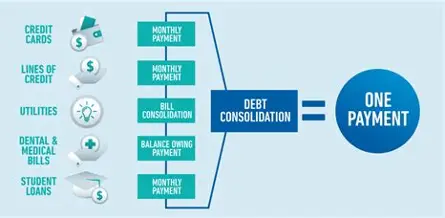
Debt consolidation means taking multiple debts (usually high-interest credit cards or personal loans) and combining them into a single new loan—typically at a lower interest rate. You get one monthly payment instead of five. Sounds clean. Feels like progress. But here’s what actually matters: you’re still paying the same money, just differently structured.
That lower rate and single payment? Those are real if you qualify. But the core math depends entirely on two things: the new interest rate and the new loan term. Get one wrong, and you’ve just extended your problem.
The Math: When Lower Rates Actually Save You Money
Let’s use real numbers. Say you’ve got $25,000 in credit card debt across three cards:
- Card 1: $8,000 at 22% APR
- Card 2: $10,000 at 19% APR
- Card 3: $7,000 at 24% APR
Your minimum payments total roughly $750/month, and you’re paying about $370/month in interest alone. Over the next five years, you’ll pay roughly $12,000+ in interest if you only make minimum payments.
Now you consolidate into a personal loan: $25,000 at 10% APR, 60 months. Your new payment is $529/month. That’s $221 less per month.
But here’s the question everyone forgets to ask: Over the full 60 months, you’ll pay $6,738 in total interest. That’s substantially less than the credit cards ($12,000+), so consolidation won math here. You’re saving roughly $5,000 in interest.
However, if you took that original $750/month and kept paying it toward your cards, you’d be debt-free in about 3.5 years instead of 5. Total interest would be around $4,500. In that scenario, consolidation costs you money because you’re stretching the payoff timeline.
This is the dangerous part: consolidation companies market the lower payment, not the lower total cost. Lower payment often means longer debt.
The Real Consolidation Scenarios
Scenario 1: You Have Bad Discipline and Need Structure
If your real problem is that you’re making minimum payments and carrying balances month to month, a consolidation loan can force better behavior. One payment, one due date, no temptation to use the card again. This works if you’re honest about your spending and willing to cut up or freeze the consolidated cards. The interest savings are secondary to actually paying off the balance. This scenario has real value—maybe 30% of the time.
Scenario 2: You Have a Rate Problem
You’re paying 22-25% APR on revolving debt, but you have decent credit or a secured asset. A personal loan at 8-12% or a home equity line of credit at 6-8% legitimately saves you money if you maintain the same payment schedule. Don’t extend the term. Take the payment you’re already making and apply it to the new loan at the better rate. You’ll be debt-free faster and pay thousands less in interest. This is clean math.
Scenario 3: The Balance Transfer Trap
Some cards offer 0% APR for 12-21 months on transferred balances. The math looks amazing until you realize there’s a 3-5% transfer fee ($750-$1,250 on a $25,000 balance) and you have to finish paying off the balance before the promotional rate expires. If you don’t, the APR can jump to 25%+. This only works if: (1) you can pay off the full balance during the 0% window, and (2) you don’t rack up new debt. For most people, it’s a psychological trap disguised as a solution.
Scenario 4: Home Equity Consolidation
Borrowing against home equity is cheaper than personal loans—rates are usually 6-8% because the loan is secured by your house. The interest is (technically) tax-deductible as mortgage interest. But you’ve now mortgaged your house to pay off credit cards. If you then run up the credit cards again, you’re carrying two debts where one existed. I’ve seen this end poorly more times than it’s worked well.
What Debt Consolidation Won’t Fix
Consolidation is a structural change, not a behavioral one. If you consolidated $25,000 in credit card debt two years ago and you’re now back up to $15,000 in new debt, consolidation didn’t solve your problem. You did.
The same is true for income issues. If your debt problem exists because you’re spending more than you earn, a lower payment just prolongs the inevitable. Consolidation isn’t a substitute for either cutting expenses or increasing income.
The Consolidation Checklist: Will It Actually Help?
Before you consolidate, answer these:
- Is the new interest rate genuinely lower? Not the payment—the rate. Run the full-term numbers.
- Will you maintain the same payment amount? If you’re currently paying $750/month, can you keep paying $750 to the consolidation loan instead of dropping to the lower payment?
- Can you commit to not using the old accounts again? Consolidating while still carrying balances defeats the purpose.
- Are you avoiding a debt spiral? If you’ve consolidated before and racked up new debt, this isn’t the fix.
- Have you considered the fees? Personal loans, balance transfer fees, and origination charges add up. Factor these into your true interest cost.
If you answer “yes” to most of these, consolidation might work. If you’re sketchy on even one, it probably won’t.
The Hard Truth
Consolidation doesn’t make debt disappear faster—it just reorganizes it. The only things that actually eliminate debt are: (1) paying more than the minimum, (2) earning more money, or (3) spending less.
In 15 years of dealing with debt structures, the people who consolidated successfully were the ones who were already paying down their debt aggressively. For them, consolidation was a tool to optimize what they were already doing. The people who consolidated hoping it would fix everything? Most of them ended up worse off.
Your credit card companies have already done the math. They know how much interest they’ll collect from you. Consolidation companies also know the math. They’re betting you’ll keep making the minimum payment and stretch out the term. The only way you win is if you understand the actual numbers and refuse to be moved by the simplicity of a lower monthly payment.
If you’re going to consolidate, do it with eyes open. Calculate your actual interest savings. Commit to a payoff timeline. And be honest about whether you have a debt problem or a spending problem. One can be restructured. The other requires a different fix entirely.
Want to dive deeper? Check out our articles on the Debt Avalanche vs. Snowball method to compare repayment strategies, or explore how extra mortgage payments accelerate your payoff timelines. The principles are identical whether you’re paying off credit cards or optimizing commercial real estate debt.
Keep reading: Personal Loan vs. Credit Card: Which Should You Use to Pay Off Debt?, How to Pay Off Debt Faster: The Avalanche vs. Snowball Method Explained, and Credit Card Debt Payoff Calculator: What Nobody Tells You About Minimums.