
What Happens If You Pay an Extra $200/Month on Your Mortgage
What Happens If You Pay an Extra $200/Month on Your Mortgage
By Mark Caldwell | PlainMoneyAdvice.com
Most people look at their mortgage statement, see that minimum payment, and write the check. That’s it. That’s the whole decision.
I get it. Money’s tight, life is busy, and $200 a month feels like a lot when you’ve got groceries, car payments, and a utility bill that seems to go up every winter. But I want to show you exactly what that $200 does if you redirect it toward your mortgage principal – because the numbers are genuinely surprising, and this is one of the few personal finance moves where the math is completely on your side.
The Setup: A Typical American Mortgage
Let’s use a real-world example instead of some textbook fantasy scenario.
Say you bought a home two years ago. You’ve got a $280,000 mortgage at 6.5% interest on a 30-year fixed loan. Your principal and interest payment is roughly $1,770/month.
Over 30 years, if you pay exactly that amount and nothing more, here’s what you’re looking at:
- Total interest paid: approximately $357,000
- Total paid (principal + interest): $637,000
- Loan paid off: Month 360 — 30 years from now
That $357,000 in interest is not a typo. You borrow $280,000 and the bank collects $357,000 in interest on top of it. That’s the deal you agreed to when you signed.
Now let’s see what adding $200/month does to that picture.
What $200/Month Extra Actually Does
When you add $200 to your monthly payment and direct it to principal, here’s what changes:
- Total interest paid drops to approximately $277,000
- You save roughly $80,000 in interest
- Your loan pays off about 5 years and 4 months early
Let that sink in. Two hundred dollars a month — about what a lot of people spend on subscriptions, takeout, or one night out — cuts more than five years off your mortgage and saves you eighty thousand dollars.
That’s not a rounding error. That’s a car. That’s a college semester. That’s a meaningful chunk of retirement savings.
Why the Math Works This Way
Here’s what most people don’t fully understand about how mortgages are structured: in the early years, almost nothing you pay goes toward principal.
On that $1,770 payment in month one, roughly $1,517 goes to interest and only $253 goes toward actually reducing your loan balance. You’re essentially renting your own house from the bank for the first decade.
When you pay extra and direct it to principal, you’re doing two things at once:
- Reducing the balance faster — so there’s less loan for interest to accrue on
- Shortening the amortization schedule — which means every future payment has a slightly higher principal split
Each extra dollar you put in compounds backward — it eliminates future interest charges you would have paid on that balance. That’s why $200/month produces $80,000 in savings. You’re not just paying $200 extra 64 times. You’re cutting off years of interest charges that would have stacked up on top of each other.
The Comparison Nobody Talks About: Extra Payment vs. Investing
I’d be doing you a disservice if I didn’t bring this up, because it’s the objection that always comes up: “Shouldn’t I invest that $200 instead of paying down my mortgage?”
It’s a fair question. Here’s the honest answer.
If your mortgage rate is 3% or 4%, the math probably favors investing. Historically, a diversified stock index has returned 7–10% annually over long periods. Paying down a 3.5% loan to save 3.5% while potentially earning 8% elsewhere is a tough argument.
If your mortgage rate is 6%, 6.5%, or higher — which is where a lot of people are right now — the math gets much closer, and the guaranteed nature of the interest savings starts to look pretty good. The stock market’s average return is not guaranteed. Your mortgage interest savings? Those are guaranteed the day you make the payment.
There’s also the psychological side. Debt creates anxiety for a lot of people. There’s real value in knowing your home is becoming more and more yours every month. That’s not irrational — it’s a legitimate financial preference.
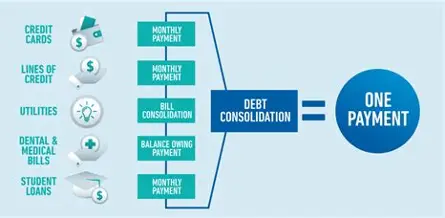
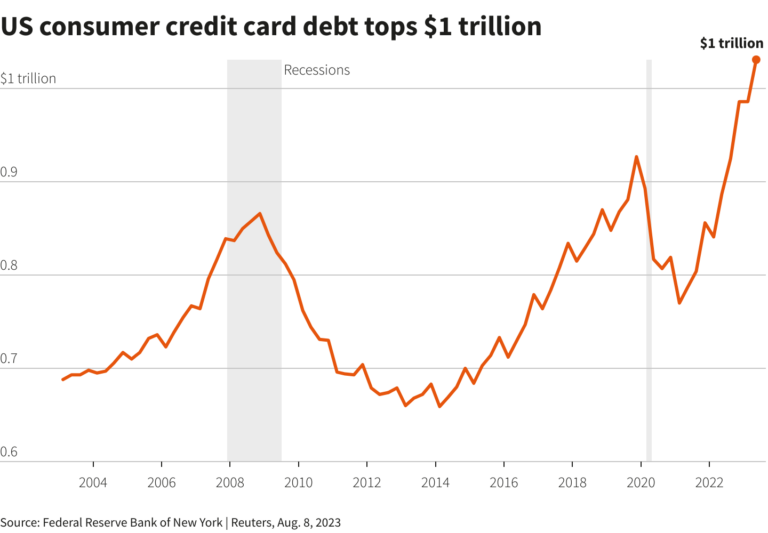
My take: if you have high-interest debt (credit cards, personal loans), knock that out first. Then build a solid emergency fund — at minimum three months of expenses. After that, at a 6%+ mortgage rate, splitting extra cash between investing and accelerated mortgage payoff is a perfectly reasonable strategy.
How to Actually Do This (Without Screwing It Up)
This part matters. Paying extra on your mortgage is simple, but you can do it wrong.
Step 1: Confirm your loan has no prepayment penalty. Most conventional mortgages don’t, but check. Read your original loan documents or call your servicer. This is rare but worth verifying.
Step 2: Specify that extra money goes to principal. This is critical. If you just send in a bigger check without specifying, some servicers will apply the overage to next month’s payment — not to your principal balance. You’ll essentially just be paying ahead, not paying down. Write “apply to principal” in the memo line, or look for a separate field when paying online. Call your servicer if you’re unsure how their system handles it.
Step 3: Set it up automatically. The easiest thing to do is set up an automatic extra payment of $200 each month directed to principal. Most bank payment systems allow you to add an additional principal payment on top of your regular payment. Do it once, forget about it, let it work.
Step 4: Don’t touch your emergency fund to do this. Extra mortgage payments are illiquid. Once you make them, that money is trapped in your home equity — you can’t pull it back out without refinancing or selling. Keep your emergency fund intact. Pay extra with discretionary income only.
What If You Can’t Do $200? What If You Can Do More?
The $200 example is useful, but let’s scale it.
| Extra Monthly Payment | Interest Saved | Years Saved |
|---|---|---|
| $100/month | ~$45,000 | ~3 years |
| $200/month | ~$80,000 | ~5.3 years |
| $400/month | ~$130,000 | ~8.5 years |
| $500/month | ~$150,000 | ~10 years |
(Based on $280K loan at 6.5%, 30-year term, starting from year 1)
Even $50 a month matters. It’s not as dramatic, but it adds up. The point isn’t to hit a specific number — it’s to understand that every dollar directed at principal saves you multiples of that dollar over the life of the loan.
A Few Situations Where This Makes Less Sense
Extra mortgage payments aren’t the right move for everyone. Here’s when you should pump the brakes:
- You have credit card debt. Pay that off first. A 20% APR credit card is destroying you far faster than a 6.5% mortgage is.
- You don’t have an emergency fund. Job loss, medical bills, car repairs — they happen. You need liquid cash before you start locking money into home equity.
- Your mortgage rate is below 4%. At that rate, the case for investing extra cash instead is much stronger.
- You’re planning to sell in the next 3–5 years. You’ll capture the equity when you sell regardless, so paying extra has less long-term impact on your situation.
The Bottom Line
An extra $200 a month on a typical mortgage saves you somewhere in the neighborhood of $80,000 in interest and gets you out of debt more than five years early. That’s not a financial hack or a trick — it’s just math, and the math is real.
You don’t need a financial advisor to do this. You don’t need a complicated spreadsheet. You need a servicer that will correctly apply extra payments to principal (verify this), and the discipline to set up an automatic extra payment and leave it alone.
The bank is making a lot of money off your mortgage. Every extra dollar you pay in principal is a dollar they don’t collect interest on — for the next 20-plus years. Do the math once. Then decide what that $80,000 is worth to you.
Mark Caldwell is a commercial real estate investor based in the Midwest and the founder of PlainMoneyAdvice.com. He writes about personal finance topics for regular Americans who want straight answers without the sales pitch.
Keep reading: Should You Pay Off Your Mortgage Early? The Math Says Maybe., Mortgage Payoff Calculators & Comparisons: What the Numbers Actually Tell You, and The 50/30/20 Budget Rule: Does It Actually Work?.