
How to Retire Early on Real Estate Income: A Realistic Roadmap
If you spend any time on social media, you have probably seen a twenty-four-year-old standing in front of a leased sports car claiming they retired on real estate in eighteen months. They tell you to buy properties with zero money down, leverage yourself to the hilt, and collect passive mailbox money while you sip drinks on a beach.
I have been investing in real estate here in the Midwest for over twenty years. I started with a modest duplex, made plenty of mistakes, bought single-family rentals, and eventually transitioned into commercial properties. Let me give you the unvarnished truth: real estate is one of the most reliable wealth-builders available to regular Americans, but it is rarely fast, and it is never completely passive.
Retiring early on real estate income is a practical, achievable goal for a middle-income household. But it requires discipline, conservative math, and a timeline measured in a decade or more, not months. Here is a realistic roadmap for how to actually pull it off.
Step 1: Calculate Your Target Net Cash Flow
Early retirement does not require millions in property value. It requires reliable cash flow that exceeds your living expenses. Wall Street focuses on net worth, but net worth does not pay for groceries or health insurance. Cash flow does.
Start by determining your baseline living costs in retirement. For a lot of middle-class families, a realistic target is $5,000 to $7,000 a month in after-tax cash flow, assuming personal consumer debt and your personal mortgage are paid off. For this roadmap, let us use a clear target: $6,000 per month ($72,000 per year) of clean, dependable net income.
Notice the word net. One of the biggest mistakes beginners make is confusing gross rental income with spendable profit. If a property rents for $1,500 a month and the mortgage is $1,100, you did not make $400. In reality, you might have made $50, or you might have lost money once all the real-world expenses hit.
Step 2: Understand the “Boring Math” of Real Rental Expenses
Properties age. Things break. Tenants leave. Taxes rise. If you do not account for these items in your projections, your early retirement will quickly turn into a financial emergency.
When analyzing potential rental income, seasoned investors subtract the following items from the gross rent before celebrating:
- Property Taxes and Insurance: These rise over time and never go away, even after the mortgage is paid.
- Vacancy: Even in strong rental markets, assume a five to eight percent vacancy rate over the life of an asset. Between cleaning, marketing, and screening, units sit empty occasionally.
- Repairs and Maintenance: Budget roughly eight to ten percent of gross rents for routine repairs like clogged plumbing, broken garbage disposals, and minor electrical fixes.
- Capital Expenditures (CapEx): This is the big fund for long-life items. Roofs, driveways, furnaces, water heaters, and air conditioners will all fail eventually. You must set aside money every single month to prepare for those checks.
- Property Management: Even if you manage properties yourself in the beginning, always underwrite eight to ten percent for professional management. If you plan to retire early, you do not want to unclog toilets at two in the morning. Your portfolio must be able to support hiring someone else to run it.
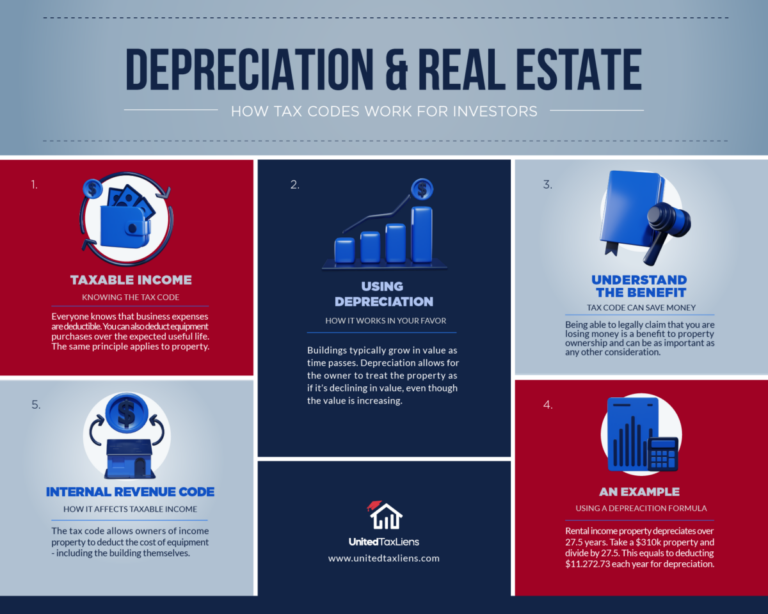
After factoring in all operating costs and debt payments, a solid residential rental property typically produces between $150 and $300 per door in true, long-term net monthly cash flow while carrying a mortgage. When you look at it through that lens, you quickly realize that replacing a full-time salary requires deliberate scaling.
Phase 1: The Accumulation Stage (Years 1 to 5)
You cannot invest without capital. The first few years are the hardest because you have to fund the engine using your day job.
1. House Hacking
If you are able to do it, house hacking is the single fastest way for an average earner to jumpstart a real estate portfolio. This means purchasing a small multi-unit property (a duplex, triplex, or fourplex) using an owner-occupant loan like an FHA or conventional low-down-payment program. You live in one unit and rent out the others.
The tenants pay most or all of your housing payment. This drastically reduces your personal living costs, allowing you to save money at an incredible pace for your next down payment. After living there for a year, you can move out, keep the property as a full rental, and buy another.
2. The Live-Below-Your-Means Reality
If you cannot house hack due to family size or location, you must do it the old-fashioned way: live on sixty to seventy percent of your income and stack cash in a high-yield savings account. You need twenty to twenty-five percent down for traditional investment property loans, plus three to six months of operating reserves for each property. Buying rentals without cash reserves is reckless.
Phase 2: Building the Core (Years 6 to 10)
Once you own two or three properties, momentum begins to build. Your properties are generating some income, tenant rent is slowly paying down principal balances, and your personal savings rate remains high.
During this stage, your focus should be on practical, working-class properties. Avoid high-end luxury rentals (where yields are poor) and avoid deep-discount, high-crime neighborhoods (where paper returns look high, but turnover and unpaid rent destroy real profits). In the Midwest and across the South, standard B-class and C-class single-family homes and small apartment buildings provide the steadiest cash flow and tenant stability.
Reinvest every single dime of cash flow. Do not use rental income to upgrade your car or take lavish vacations during Phase 2. Use the cash flow, plus your ongoing job savings, to purchase another property every eighteen to twenty-four months.
Phase 3: The De-leveraging Phase (Years 11 to 15)
Here is where many modern real estate gurus give terrible advice. They encourage investors to keep leveraging up forever, borrowing more against appreciated properties to buy even more units. That strategy works fine in a zero-interest-rate environment with rising rents, but it leaves you vulnerable to catastrophe when a downturn hits.
True early retirement requires peace of mind. To safely quit your job, you want minimal risk. The best way to de-risk a real estate portfolio is to pay off the debt.
Consider the math on two different paths to reach our $6,000 monthly income goal:
- Strategy A (High Leverage): You own twenty properties, each carrying a heavy mortgage. Each unit produces $300 in net cash flow. Total income: $6,000 per month. But you have massive debt obligations, high operational complexity, and twenty tenants to worry about. If a major economic shock occurs and three tenants stop paying, your profit evaporates.
- Strategy B (Low or Zero Leverage): You own six properties completely free and clear. Each property rents for $1,600 per month. After setting aside forty percent for taxes, insurance, maintenance, CapEx, and management, each property nets roughly $1,000 per month. Total income: $6,000 per month.
Strategy B is vastly superior for retirement. You have fewer roofs to replace, fewer tenants to manage, and almost zero risk of foreclosure. If a unit sits vacant for two months, you simply make slightly less money that quarter. You do not risk bankruptcy.
Use the combined cash flow from your entire portfolio in Years 10 through 15 to attack the mortgages using a debt snowball method. Pay off property one, then apply its cash flow to property two, and repeat until several properties are owned outright.
A Realistic 15-Year Scenario
What does this look like in practice for an average couple earning a combined $85,000 per year?
- Years 1 to 3: Save aggressively and buy Property 1 (a duplex) with an owner-occupant loan. Live in one unit, rent the other. Save housing costs. Purchase Property 2 (a single-family home) with twenty percent down in Year 3.
- Years 4 to 7: Move out of the duplex into a modest primary residence. Buy Property 3 and Property 4. The rental portfolio now contains five rental units. Reinvest all operational income.
- Years 8 to 11: Purchase Property 5 and Property 6. Stop acquiring new properties. The portfolio is now big enough. Divert all excess portfolio cash flow plus personal savings toward paying off the mortgage on Property 1.
- Years 12 to 15: The snowball takes effect. With the first property paid off, the accelerated payments wipe out the mortgages on Properties 2, 3, and 4.
By year fifteen, this household owns four to five paid-off rental properties generating clean, low-stress income. They can comfortably step away from their primary careers in their forties or early fifties.
Two Critical Traps to Avoid
If you want to achieve this, you have to avoid the two traps that derail most aspiring rental investors.
1. Neglecting Cash Reserves
Real estate eats cash at unexpected moments. You might go eight months without a single repair call, and then have an HVAC unit die during the same week a tenant skips out on rent. Never run your rental business with less than $5,000 to $10,000 in dedicated liquid cash reserves per property. If you bleed your reserves dry to buy your next deal, you are gambling, not investing.
2. The DIY Trap
If you spend your early retirement painting baseboards, fixing toilets, and tracking down late rent payments, you did not retire. You just bought yourself a low-paying, stressful job. From day one, operate your portfolio like a business. Use software to collect rents, screen tenants rigorously using objective criteria, and build relationships with reliable property managers so you can hand off day-to-day operations when you leave your career.
The Bottom Line
Early retirement through real estate does not happen overnight, and it does not happen by accident. It is the result of saving your seed capital, buying unglamorous properties in steady areas, underwriting your expenses realistically, and paying down your debt. If you are willing to give the process ten to fifteen years of patient execution, real estate can provide a retirement that is both financially secure and truly work-free.
Keep reading: How to Retire Early: The Math Behind FIRE Explained.